
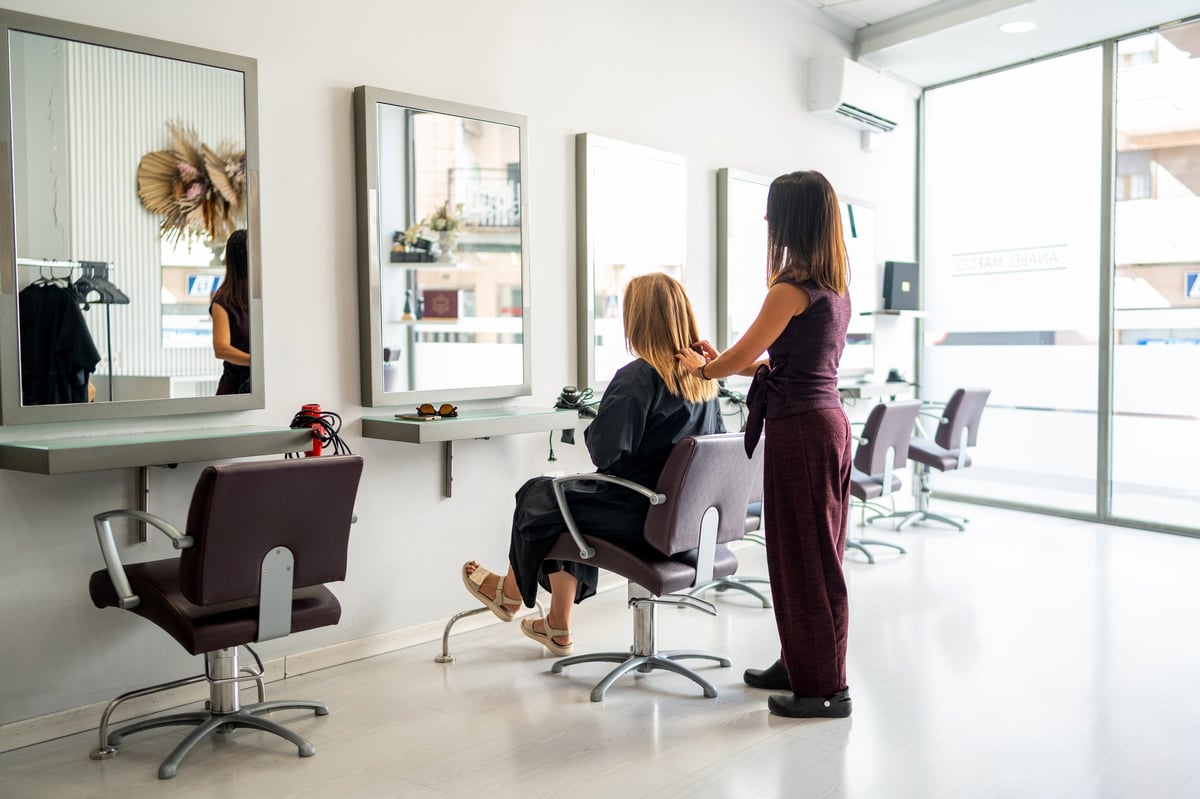
Salons and barbershops run on relationships. Buyers are buying a clientele, and the central question in every salon or barbershop sale is whether those clients will stay when the owner leaves. Here is what North Carolina owners need to understand before going to market.
Jon Tennant
Real Estate & Business Brokerage · Midtown Mergers and Acquisitions
Hair salons and barbershops are among the most personal businesses in any market. They run on relationships. The stylists know their clients by name. The clients show up at the same chair for years. When it comes time to sell, that intimacy is both the business's greatest asset and its greatest challenge. Buyers are buying a clientele, and the central question in every salon or barbershop sale is whether those clients will stay when the owner leaves.
Beauty and personal care businesses are valued primarily using seller's discretionary earnings (SDE) with a multiple applied based on business quality, location, and stability. Based on BizBuySell transaction data, the average SDE multiple for beauty and personal care businesses runs approximately 2.14x, with hair salons averaging around 2.18x. Revenue multiples average approximately 0.44x.
Within the category, there is meaningful variation. Established salons with long-tenured stylists, high client retention, strong online reviews, and documented recurring revenue from loyal clients command multiples at the higher end. Newer salons, owner-operated single-chair setups, or businesses where the owner IS the primary producer command lower multiples because buyers see a higher risk of client attrition when the owner exits.
This is the most common value-killer in salon and barbershop sales in North Carolina. If you are the best stylist in your shop, the one clients book by name, the face on the signage, and the reason people drive across town, buyers will discount heavily because they know that when you leave, a meaningful portion of your clientele may leave too.
The solution is not to stop being good at your craft. It is to build a team around you that carries real client relationships independently. If your shop has four stylists each with their own loyal books, the business is far more transferable than a shop where one person drives 70% of revenue.
Start building that independence 12 to 18 months before you plan to sell. Introduce clients to other stylists. Let team members handle their own bookings. Create a culture where the shop, not just the owner, is the brand.
When clients book by name and the owner personally drives most of the revenue, buyers model meaningful client attrition into their offer. Your multiple compresses.
A shop where multiple stylists each have their own independent books transfers cleanly. The shop, not the owner, is what clients are buying.
How your stylists are compensated significantly affects how buyers evaluate your business. There are two primary models:
Stylists are paid a percentage of the revenue they generate. The salon controls the stylist experience, scheduling, and culture. Revenue is more predictable because stylists are employees or commissioned contractors operating within your structure.
Stylists pay the owner a weekly or monthly fee to use a station. Revenue to the owner is the rental income, not a percentage of service revenue. The renters are independent contractors who can leave for another location at any time.
Buyers generally prefer commission-based structures for acquisition because the revenue is more directly tied to the business rather than to individual stylists who can walk out the door. If you are on a booth rental model and planning to sell, be prepared to explain the stability of your renter relationships and the history of renter tenure.
For a brick-and-mortar salon or barbershop, location and lease are as important as the financials. A shop in a high-traffic strip center with a favorable long-term lease is a meaningfully different asset from one in a declining location with 18 months left on a lease at above-market rent.
Before you go to market, understand your lease situation. How much time is left? Is it assignable to a buyer? What are the renewal terms and renewal rent? A buyer who cannot get comfortable with the lease will not close.
If your lease is running short, consider negotiating an extension before you list. A longer lease with a defined renewal option makes the business significantly more financeable through SBA and more attractive to buyers generally.
North Carolina requires cosmetology salons to hold a state license from the NC State Board of Cosmetology. Barbershops are licensed through the NC State Board of Barber Examiners. These licenses are issued to the business location and are typically not directly transferable to a new owner. The buyer will need to apply for their own license for the location.
This is a process rather than a barrier, but buyers need to understand the timeline. Operating under the prior owner's license after the sale closes is not permitted. Factor the licensing transition into your deal timeline and due diligence planning.
Licensed through the NC State Board of Cosmetology. The license is issued to the business location and is not directly transferable. The buyer must apply for a new license for the same location.
Licensed through the NC State Board of Barber Examiners. Same non-transferable rule. Plan the licensing transition into your deal timeline and due diligence planning so closing is not delayed.
Strong client retention data. Average client visit frequency, percentage of clients on recurring booking schedules, and Google review volume and rating are all signals buyers use to evaluate how sticky the clientele is.
Team stability. How long have your stylists been with you? Low turnover is a strong signal. High turnover is a warning sign that buyers will investigate.
Clean books. Three years of tax returns and financial statements that match what you are representing as the business's performance. Cash businesses that have underreported income face the same challenge here that any cash-heavy business faces: what cannot be documented cannot be financed.
Average client visit frequency, percentage of clients on recurring booking schedules, and Google review volume and rating are all signals buyers use to evaluate how sticky the clientele is.
How long have your stylists been with you? Low turnover is a strong signal. High turnover is a warning sign that buyers will investigate.
Three years of tax returns and financial statements that match what you are representing as the business's performance. Cash businesses that have underreported income face the same challenge here that any cash-heavy business faces: what cannot be documented cannot be financed.
At Jon Tennant Real Estate and Business Brokerage, operating under Midtown Mergers and Acquisitions, we work with beauty and personal care business owners across North Carolina who are planning their exit. Reach out for a confidential consultation.
We help owner-operators value the business honestly, package it for market, vet buyers carefully, and negotiate a deal that reflects the shop you built.
Let's talk through valuation, owner dependence, structure, and what it takes to get your business buyer-ready — confidentially, with no pressure.