
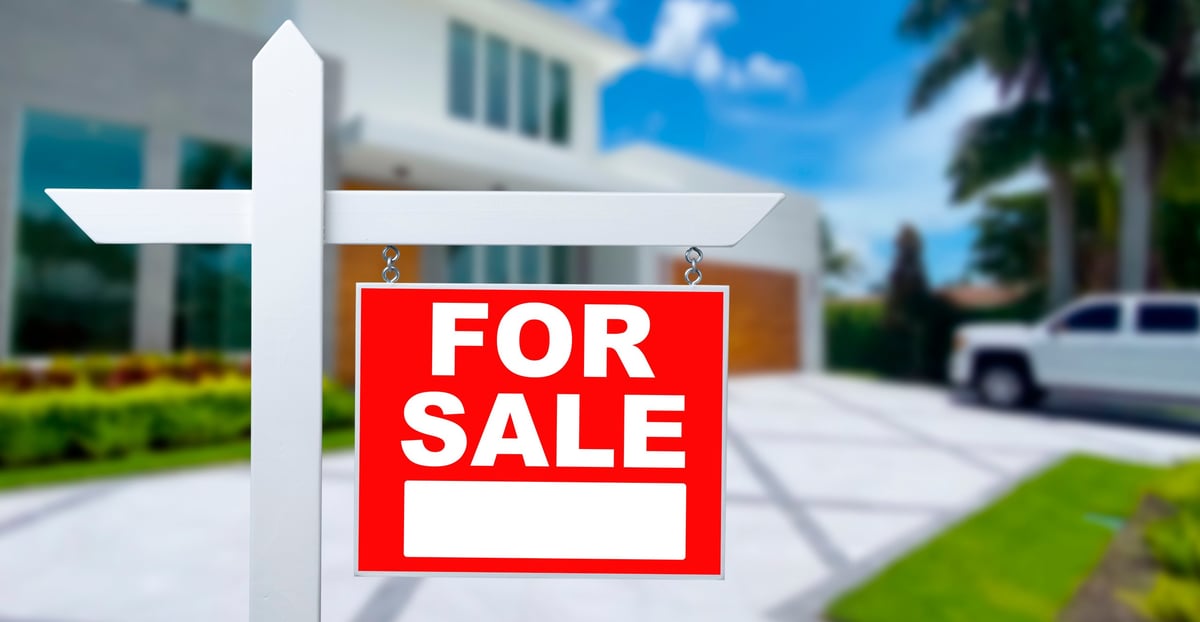
Pricing is the single most important decision a seller makes. Get it right and you attract buyers, generate showings, and close on your timeline. Get it wrong and you sit, reduce, and often net less than you would have. Here's how pricing actually works in the Triangle in 2026.
Hey friends. Pricing is the single most important decision a seller makes. Get it right and you attract buyers, generate showings, and close on your timeline. Get it wrong and you sit, reduce, and often end up netting less than if you had priced it correctly from day one. Here is how pricing actually works in the Triangle in 2026.
The Triangle in 2026 is more balanced than it has been since before the pandemic. Median days on market in Raleigh have climbed to the 50 to 70 day range depending on the submarket and price point. Buyers have more choices, more time, and more leverage than they did in 2021 and 2022. They are also more data-savvy. Most buyers have already looked at Zillow, Realtor.com, and Redfin before they ever walk through your door. They know what comparable homes have sold for. If your price does not align with that data, they will move on.
This is not a market where you can test a high price and see what happens without cost. Overpricing in this environment has real consequences.
The first two weeks of a listing are the most important. That is when buyer attention is highest, email alerts fire, and motivated buyers are scheduling showings. Overprice your home and you miss that window. Buyers and agents see a high price, skip the showing, and move on to better-priced options.
After two to three weeks with no offers, the price reduction comes. Now you have a problem. Buyers see a price reduction and ask why it sat. They assume something is wrong. They come in with lower offers. The stigma of days on market is real and it is hard to shake.
Homes that are priced correctly from day one consistently sell for more than homes that start high and reduce. That is not opinion. That is what the data shows consistently across markets.
The right price is based on comparable sales, not on what you need to net, what you paid, what Zillow says, or what your neighbor thinks. Here is how a proper comparative market analysis (CMA) works.
Your agent pulls homes that sold in the past 60 to 90 days that are similar to yours in size, age, condition, location, and features. These are your comps. What buyers actually paid for similar homes is the foundation of your pricing.
What are similar homes listed at right now? These are your direct competitors. A buyer choosing between your home and a comparable home down the street is making a price-to-value decision.
Homes under contract but not yet closed signal where the market is heading right now. If pending sales are coming in above recent closed prices, the market may be strengthening. If they are coming in below, adjust accordingly.
A CMA is not just an average. Your agent adjusts for your home's condition, lot size, upgrades, school district, and any unique features or drawbacks compared to each comp.
Buyers search in price bands, not exact numbers. A buyer with a $500,000 budget searches $450,000 to $500,000 or $475,000 to $525,000. If you price at $503,000, you miss the $450,000 to $500,000 search and do not show up for most of the buyers who would actually consider your home.
Your agent should price with search bands in mind. Rounding to a number that sits clearly within a common search range puts your home in front of more qualified eyes.
If you have been on the market 21 to 30 days with showings but no offers, your price is the problem. A price reduction of 1% to 2% often does not move the needle. Meaningful reductions that create buyer urgency are typically 3% or more.
If you are not getting showings at all, the price is even further off. Agents and buyers are filtering your home out before they even schedule a visit.
Price once correctly and aggressively rather than chasing the market down in small increments. Each reduction signals weakness. One well-timed and well-priced listing is far stronger than three reductions over 90 days.
Spring (mid-March through early June) is historically the strongest selling window in the Triangle. More buyers are active, school-year timing drives urgency, and competition among buyers tends to be higher. If you are listing in fall or winter, factor in the typically slower pace when setting your expectations and strategy.
Pricing is not a feeling. It is an analysis. The sellers who price based on data, listen to their agent, and resist the urge to "test the top of the market" are the ones who close fastest and net the most. Reach out if you want a no-obligation CMA on your Triangle home — I will show you exactly what the data says.
Straight answers on pricing your Triangle home in 2026
I'll show you exactly what the data says about your home's value — what comparable homes sold for, where the competition sits, and the price that gets you the strongest result.