
One of the biggest economic stories unfolding in North Carolina right now is happening largely out of sight — inside massive, windowless buildings consuming enormous amounts of power and housing the servers that run the modern internet. Data centers are pouring into the Triangle and surrounding counties at a pace that is reshaping land values, driving infrastructure investment, and creating ripple effects across residential and commercial real estate markets. Here is what is happening and what it means if you own property or are looking to invest in the region.
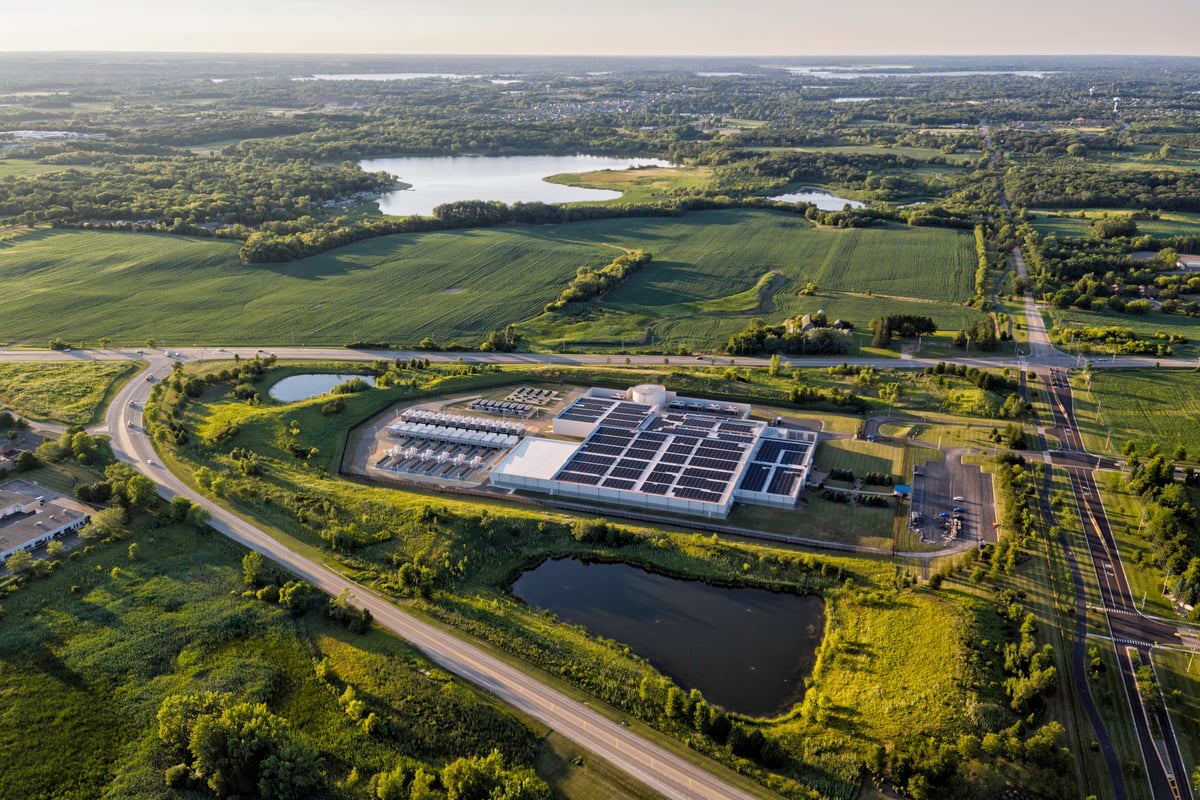
Data centers require a specific combination of factors that the Triangle delivers better than most markets on the East Coast. Reliable and affordable power from Duke Energy is the starting point — data centers consume extraordinary amounts of electricity, and proximity to stable, cost-effective power infrastructure is non-negotiable for operators. The Triangle also offers relatively low risk of natural disasters compared to coastal or hurricane-prone markets, strong fiber connectivity, access to a highly educated technical workforce, and a business-friendly regulatory environment in North Carolina.
The region also benefits from its position along the I-95 and I-85 corridors and proximity to the major population centers of the East Coast, making it an attractive location for low-latency data serving the eastern US. And critically, land is still available at prices that make large-scale development feasible — something that is increasingly difficult to find in Northern Virginia, which has been the dominant data center market in the country but is rapidly running out of affordable land and power capacity.
Duke Energy infrastructure and capacity are the non-negotiable starting point for any operator.
Inland location with far lower hurricane and coastal exposure than competing East Coast markets.
A dense fiber backbone and proximity to East Coast population centers for low-latency service.
Large tracts still pencil for hyperscale campuses — the constraint now hitting Northern Virginia.
The scale of data center investment coming into the Triangle and surrounding counties is significant. Wake County, Johnston County, and Chatham County have all seen major data center announcements and land acquisitions in recent years. Companies including Google, Apple, Microsoft, Meta, and numerous hyperscale and colocation operators have either announced projects or are actively acquiring land in the region.
Johnston County in particular has emerged as a major focus area, with several large-scale data center campus projects announced along the I-95 corridor. The combination of available land, power infrastructure, and proximity to the Triangle's fiber backbone has made Johnston County one of the fastest-growing data center markets in the Southeast.
"When a major hyperscale operator enters a market looking for 500 to 1,000 acres for a campus, it compresses the available supply of large industrial-zoned or developable land significantly — and it bids up prices for what remains."
The immediate and most direct real estate impact of the data center boom is on industrial and large-tract land values in target areas. When a major hyperscale operator enters a market looking for 500 to 1,000 acres for a campus, it compresses the available supply of large industrial-zoned or developable land significantly — and it bids up prices for what remains. Landowners in Johnston County, eastern Wake County, and southern Durham County who hold large tracts with appropriate zoning or development potential have seen significant interest from data center developers and their brokers over the past 18-24 months. In some cases, land that was valued primarily for agricultural or light industrial use has received offers reflecting data center premiums that are dramatically above prior market value.
For investors holding industrial land or flex industrial properties in these corridors, the data center demand wave is a tailwind that supports values even for properties that will not ultimately become data centers — the competition for available industrial land benefits all industrial landholders in the supply-constrained areas.
Large data center investments do not arrive alone. They bring infrastructure investment with them — power line upgrades, road improvements, fiber expansion, water and sewer extensions. This infrastructure investment has secondary benefits for surrounding properties and communities, improving the development potential and accessibility of land that previously lacked the utilities to support intensive commercial or industrial development.
Johnston County and the I-95 corridor are examples of areas where the infrastructure investment catalyzed by data center development is improving the general commercial real estate environment beyond just the data center sites themselves.
The residential real estate effect is more indirect but real. Data center campuses employ relatively few people directly — they are capital-intensive, not labor-intensive. But the broader economic signal that large technology companies are planting flags in North Carolina reinforces the Triangle's positioning as a technology and innovation hub, which supports continued in-migration of technology workers and the companies that employ them.
The same dynamics that make the Triangle attractive for data centers — power reliability, business environment, quality of life, workforce quality — are the same dynamics that attract corporate relocations and the residential population growth that has driven Triangle home prices over the past decade.
Areas adjacent to major data center development may also see increased pressure on housing as construction workers, project managers, and facility staff seek housing in the surrounding communities.
For commercial real estate investors, the data center boom reinforces the investment case for industrial and flex product in the Triangle's growth corridors — particularly along I-40, I-540, I-95, and US-70 in Johnston County. The compression of available industrial land creates a favorable supply dynamic for existing industrial property holders.
For land investors, the opportunity is in identifying large tracts with power infrastructure access, appropriate zoning or rezoning potential, and proximity to fiber that could attract data center interest — or that will benefit from the general industrial land demand that data center competition creates.
For residential buyers and homeowners, the data center boom is one more data point supporting the Triangle's long-term economic trajectory. It reinforces the region's appeal to the technology sector, supports job growth, and contributes to the population growth dynamics that have driven residential appreciation across Wake, Durham, Johnston, and Chatham Counties.
Industrial and flex product in growth corridors: I-40, I-540, I-95, and US-70.
Large tracts with power access, rezoning potential, and fiber proximity.
Another data point supporting the Triangle's long-term economic trajectory.
The data center boom is not a short-term story. It is a multi-year, multi- billion-dollar wave of capital landing in the counties surrounding the Triangle, and its effects on land values, infrastructure, and the region's economic identity will play out over the next decade. For property owners and investors in the right corridors, it is one of the most significant tailwinds the market has seen in years.
At Jon Tennant Real Estate and Business Brokerage, we work with commercial investors and residential buyers across the Triangle and its surrounding counties. Reach out for a conversation about how these market dynamics affect your specific situation.
We work with commercial investors and residential buyers across the Triangle and its surrounding counties. Reach out for a conversation about how these market dynamics affect your specific situation.