
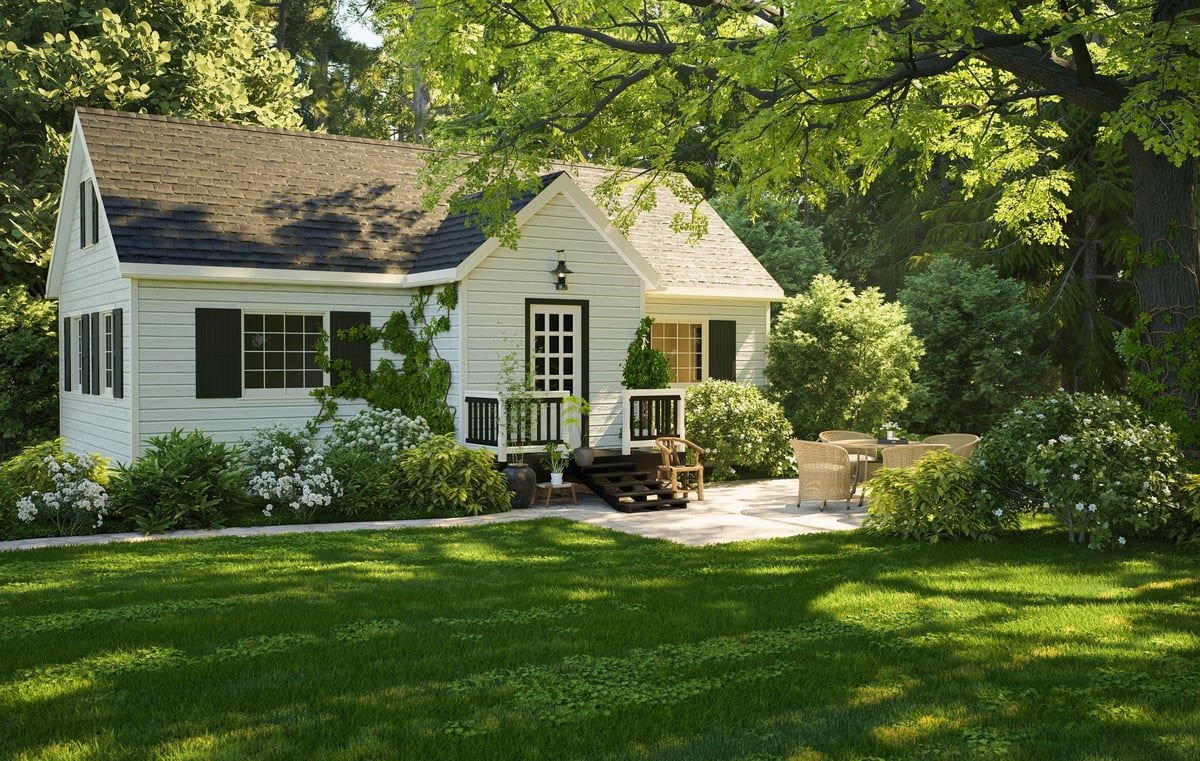
Accessory dwelling units, commonly called ADUs, have gone from a niche real estate concept to a mainstream buyer consideration in markets across the country, including the Triangle. Whether it is a detached backyard cottage, a garage apartment, a basement suite, or an attached in-law unit, ADUs represent one of the most flexible and financially compelling features a residential property can offer in 2026. Here is what you need to know if you are considering buying a home with an ADU or adding one.
An accessory dwelling unit is a secondary living space on the same lot as a primary single-family home. It has its own sleeping area, kitchen or kitchenette, and bathroom, making it a self-contained living unit rather than just a spare room. ADUs come in several forms:
Detached ADUs are separate structures on the same lot, either purpose-built or converted from an existing garage or outbuilding. They offer the most privacy for both the primary occupant and the ADU resident.
Attached ADUs share a wall with the primary home, like a converted garage or a wing addition with a separate entrance.
Interior ADUs, sometimes called in-law suites or basement apartments, are carved out of existing space within the primary home, typically a finished basement or a section of a larger home with a private entrance.
Garage conversions are among the most common ADU types in established neighborhoods, converting an attached or detached garage into livable square footage.
The appeal of an ADU-equipped property runs across several different buyer motivations.
Rental income. Renting the ADU to a long-term tenant generates income that offsets the mortgage, property taxes, and maintenance costs. In Raleigh and Durham, a well-located ADU can generate $800 to $1,500 or more per month depending on size, condition, and location. Over the life of a 30-year mortgage, that income is significant.
Multi-generational living. The Triangle has seen a meaningful increase in multi-generational household arrangements, driven by aging parents, adult children returning home, and cultural preferences for extended family living. An ADU allows family members to live on the same property with meaningful privacy and independence for both generations.
Home office or studio space. Not every ADU is used for residential tenants. Many buyers use detached ADUs as dedicated home offices, studios, or hobby spaces, which has become increasingly valuable as remote work has become permanent for a large share of the workforce.
House hacking. Buyers who plan to live in the primary unit and rent the ADU are effectively having a tenant help pay their mortgage. This strategy, sometimes called house hacking, allows buyers to qualify for and carry a larger loan than they could on income alone by factoring rental income into their debt service calculation (some lenders allow this with documented lease agreements).
Zoning rules for ADUs vary by municipality and have been evolving rapidly across North Carolina as cities respond to housing affordability pressures. Understanding the rules in your specific jurisdiction before you buy or build is essential.
In Raleigh, the city updated its ADU ordinance in recent years to allow ADUs by right in most residential zones without requiring a special use permit. Detached ADUs are generally allowed on lots that meet minimum size requirements. Owner-occupancy requirements, which previously required the owner to live on the property to have an ADU, have been relaxed in many zones.
In Durham, ADU regulations are similarly permissive in most residential zones and have been expanding. Durham has been actively working to increase housing supply, and ADUs have been a part of that policy direction.
In unincorporated Wake County, rules differ from the city of Raleigh. If you are buying in a county jurisdiction rather than within city limits, verify the applicable zoning rules with the Wake County Planning Department.
Short-term rental use of ADUs, meaning renting through Airbnb or Vrbo, is governed by separate rules in both Raleigh and Durham and may require permits or be restricted in certain zones. If short-term rental income is part of your plan, verify the rules before you count on it.
Properties with existing ADUs are a different animal than buying a primary home and planning to add one later. Here is what to evaluate when purchasing a home with an existing ADU:
Was it permitted? An unpermitted ADU creates liability for the new owner. If the unit was built without permits and does not meet code, the city can require it to be brought into compliance or removed. Always verify the permit status of any ADU with the local building department before closing.
What is its condition? ADUs vary widely in quality. A well-built, properly permitted detached cottage is a genuine income-producing asset. A converted garage with a poorly installed kitchenette and inadequate electrical service is a liability that will require significant investment before it can be legally rented.
What does the lease situation look like? If the ADU is currently rented, the lease terms convey to the new owner. Understand who the tenant is, how much they pay, what the lease terms are, and what the process for ending or modifying the tenancy looks like.
Will lenders count the rental income? Some lenders allow projected or actual ADU rental income to be used in qualifying calculations, which can increase your purchasing power. Others do not. Ask your lender specifically how they handle ADU income before you rely on it.
At Jon Tennant Real Estate and Business Brokerage, we work with buyers across Wake and Durham County who are evaluating ADU properties and can help you understand the zoning, financing, and income potential for any property you are considering. Reach out before you make an offer.
Verify the permit status, inspect the condition, review any existing lease, and confirm how your lender treats ADU rental income before you buy. Do those four things and an ADU property can be both a flexible living arrangement and a genuine income-producing asset.
Common questions about ADU homes in the Triangle and North Carolina.
We work with buyers across Wake and Durham County who are evaluating ADU homes and can help you understand the zoning, financing, and income potential before you make an offer.